
Movem8t

Overview
MoveM8 is a fitness app designed to keep people active through social accountability and friendly competition. This project focused on improving its social interaction features
The Product Manager challenged me to:
Create the opportunity for users to message each other with health and fitness goals/achievements
Create an integrated messaging experience throughout the product that drives engagement and repeat usage increasing user engagement

Problem
The existing app has ways to set individual goals, monitor them and then once achieved displays them on the user’s home screen. However, there is no mechanism to alert other members or message others as progress or goals are met. The major questions revolve around how is the messaging integrated within the existing features and is there a general messaging feature allowing users to message each other separate from health and fitness activities?
Role
As a UX/UI student researcher I led the design process from initial research to high-fidelity prototyping, including user interviews, competitive analysis, wire framing, usability testing, and iteration.
How might we make fitness tracking feel more fun and social to drive daily engagement?
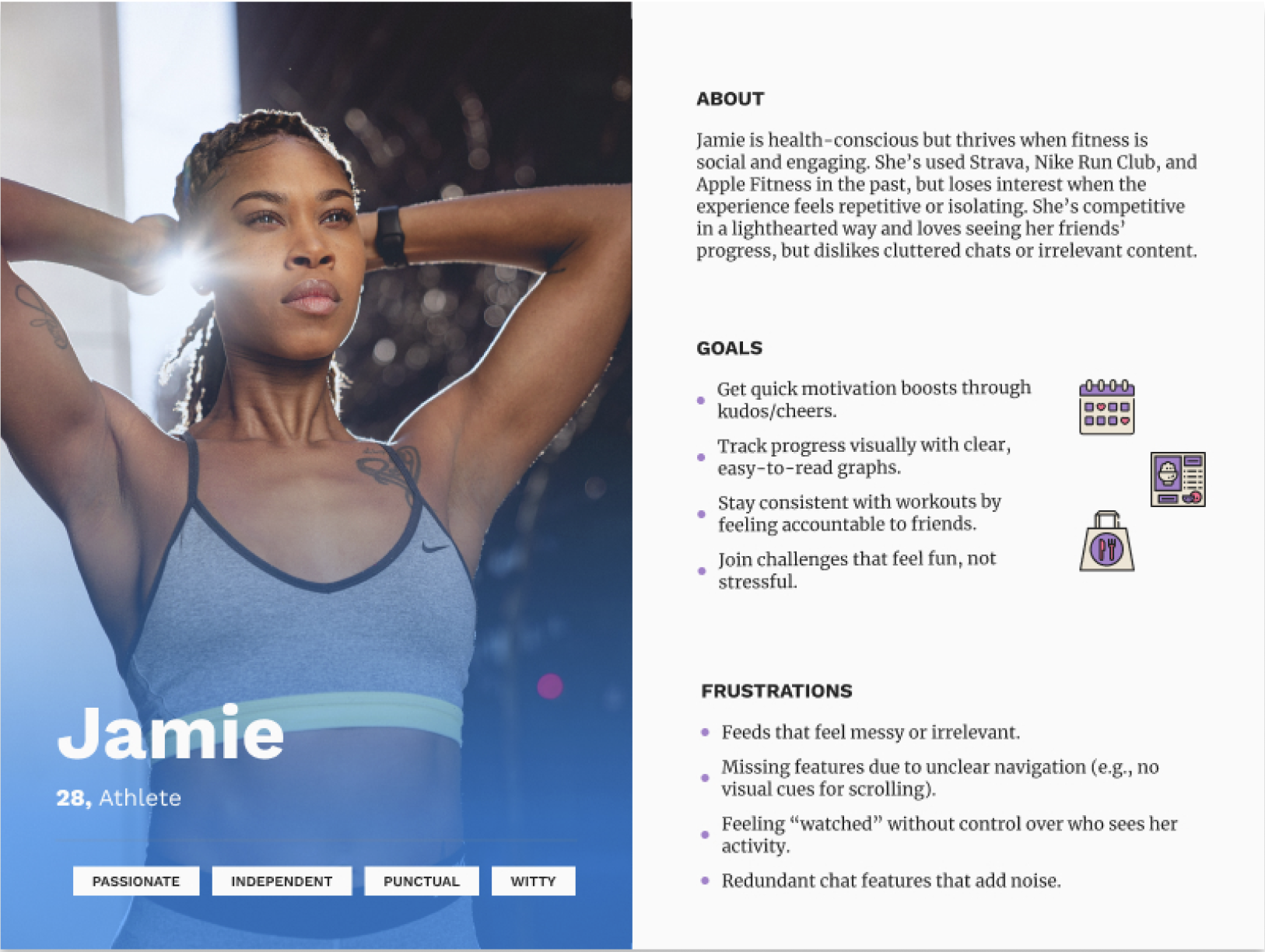
Persona : Jamie Torres
The Socially Motivated Achiever
Competitive Analysis
Strava – Comments/kudos increased repeat usage by 34%.
MyFitnessPal – Group challenge messaging boosted 30-day retention by 41%.
MapMyRun – Group chat + challenge comments drove a 32% engagement boost.
Nike Run Club – Leaderboards with social reactions increased time-in-app by ~30%.
Apple Fitness – Activity ring sharing lifted engagement by 28%.
Fitbit – General chat saw minimal impact (~5% engagement) and low usage.
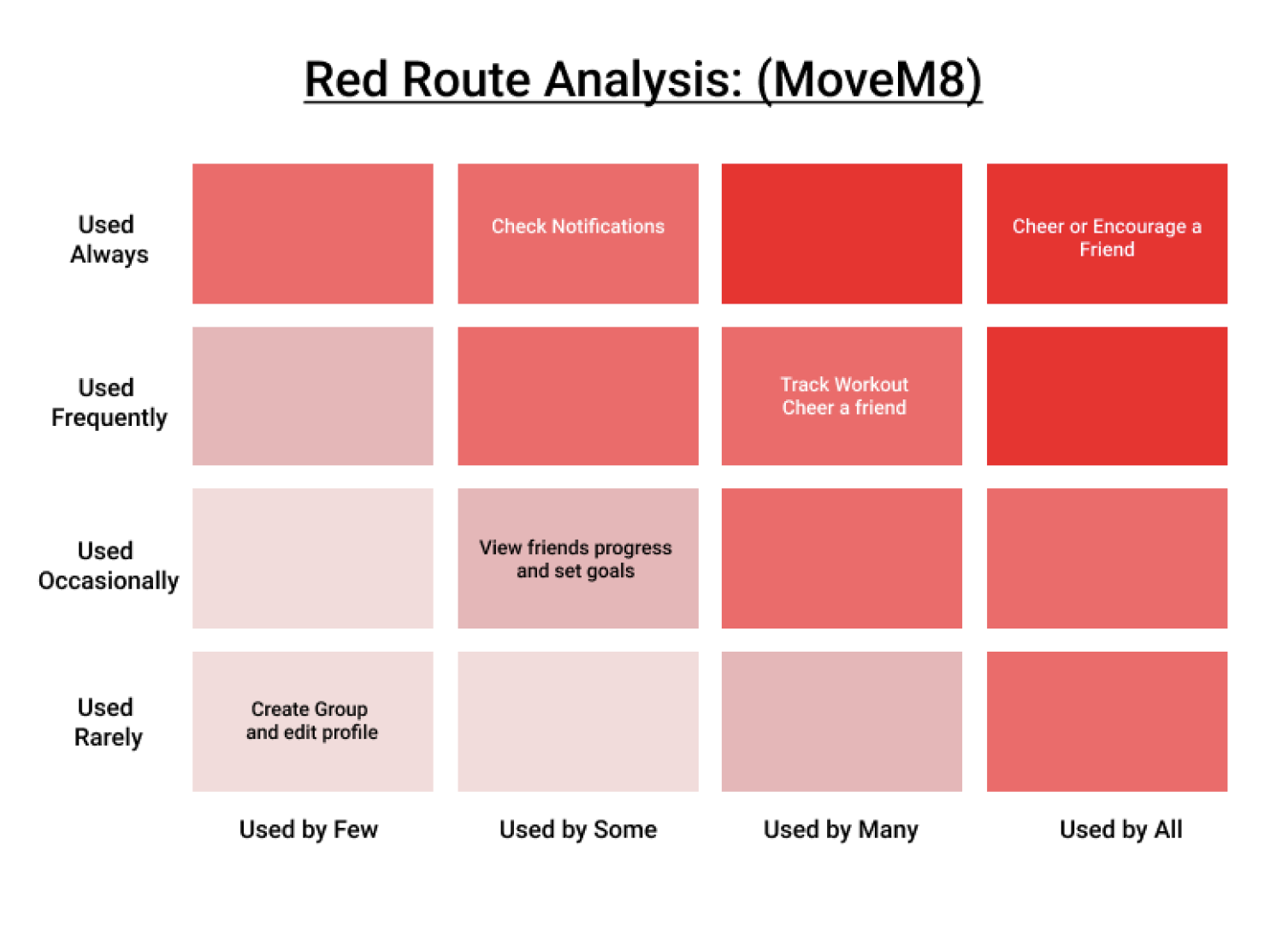
Key Design Decisions Low Fidelity
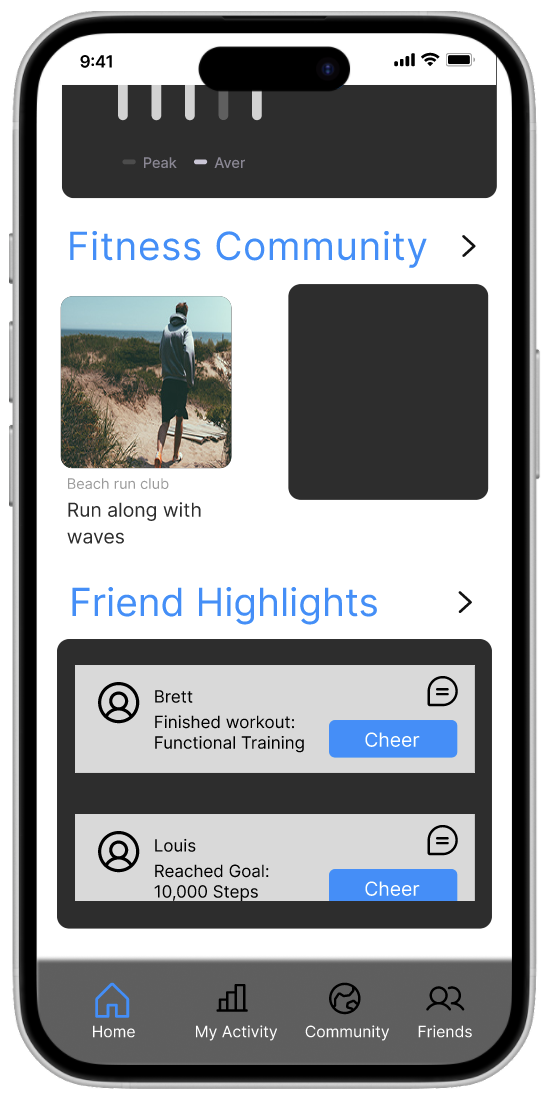
Landing page with Fitness goals progression summary, Fitness Community, and Friend Highlights
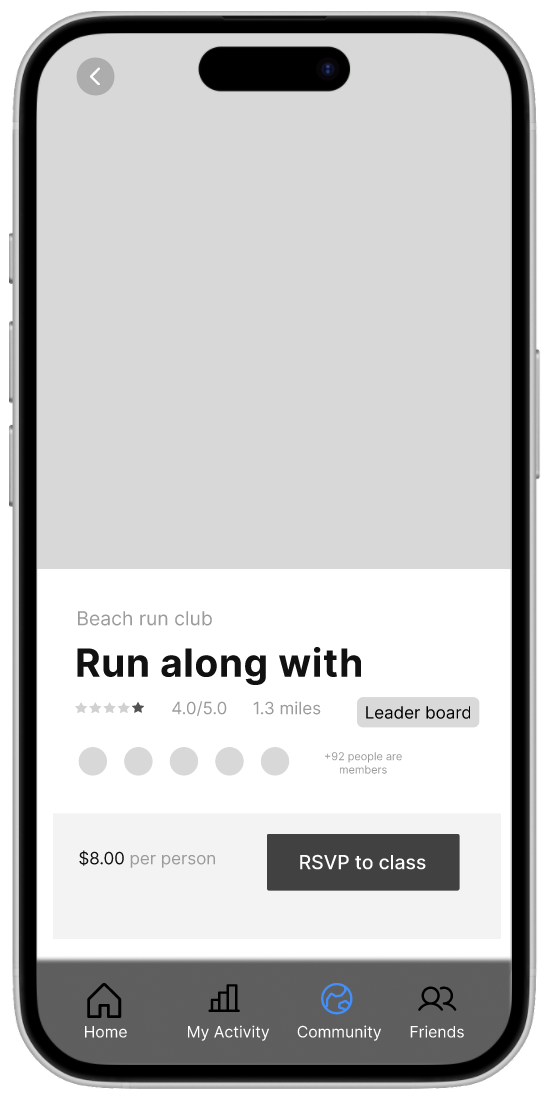
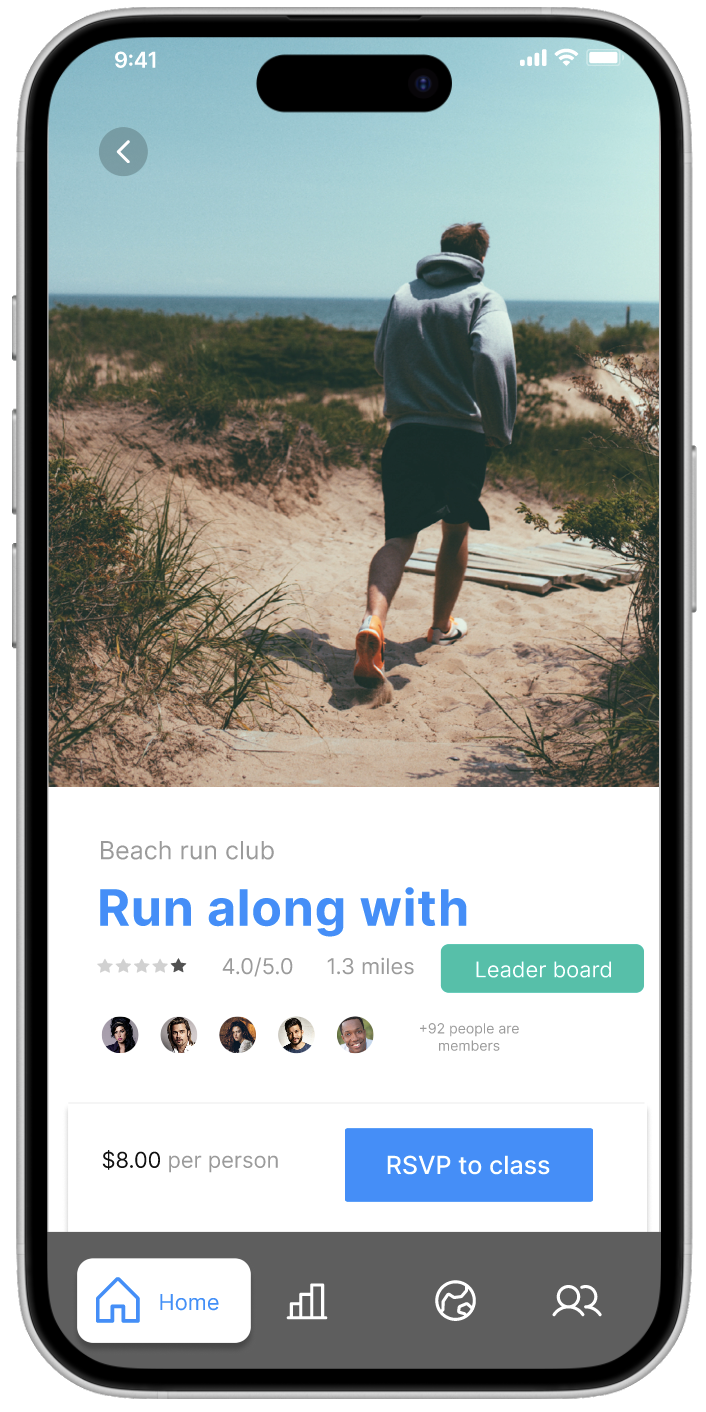
Group activities with leaderboard
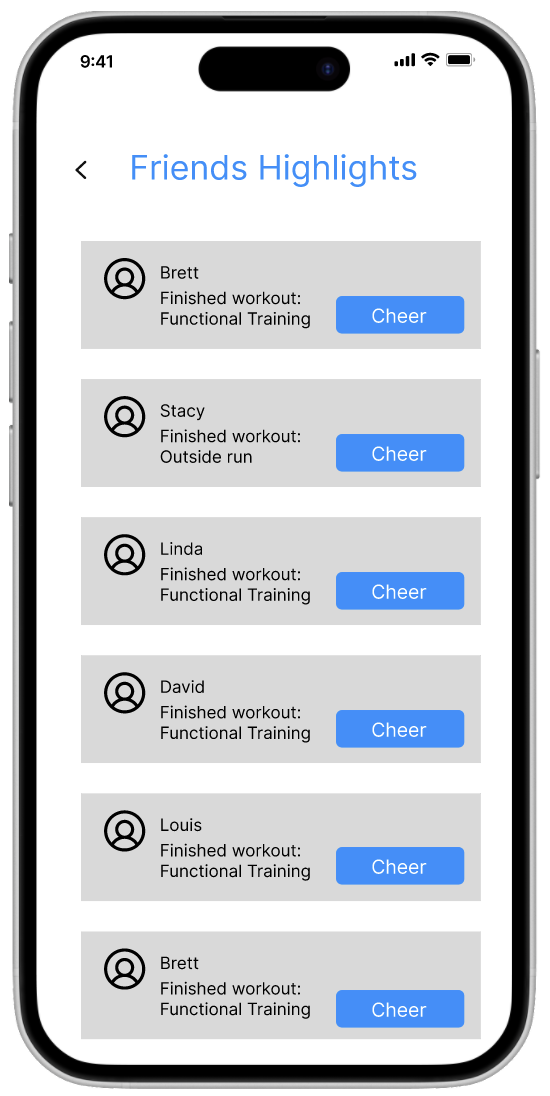
Friends Highliights that let users cheer on their friends
First round of interviews
Insight from first round research
Users wanted to track and compare progress with friends
Participants preferred challenges tied to shared goals
General chat in other apps felt redundant and low-value
Competing apps had visually cluttered feeds
Users wanted more control over who could see their activity
Design change implemented
Added a social leaderboard and friend activity feed to encourage light competition
Introduced group challenges with visible progress tracking
Focused on contextual messaging (e.g., comments/kudos on activities) instead of generic chat
Designed a simplified feed layout with stronger visual hierarchy and clearer separation between activities
Added privacy and visibility controls inspired by social media settings
Key Design Decisions First Iteration
Low fidelity mockup
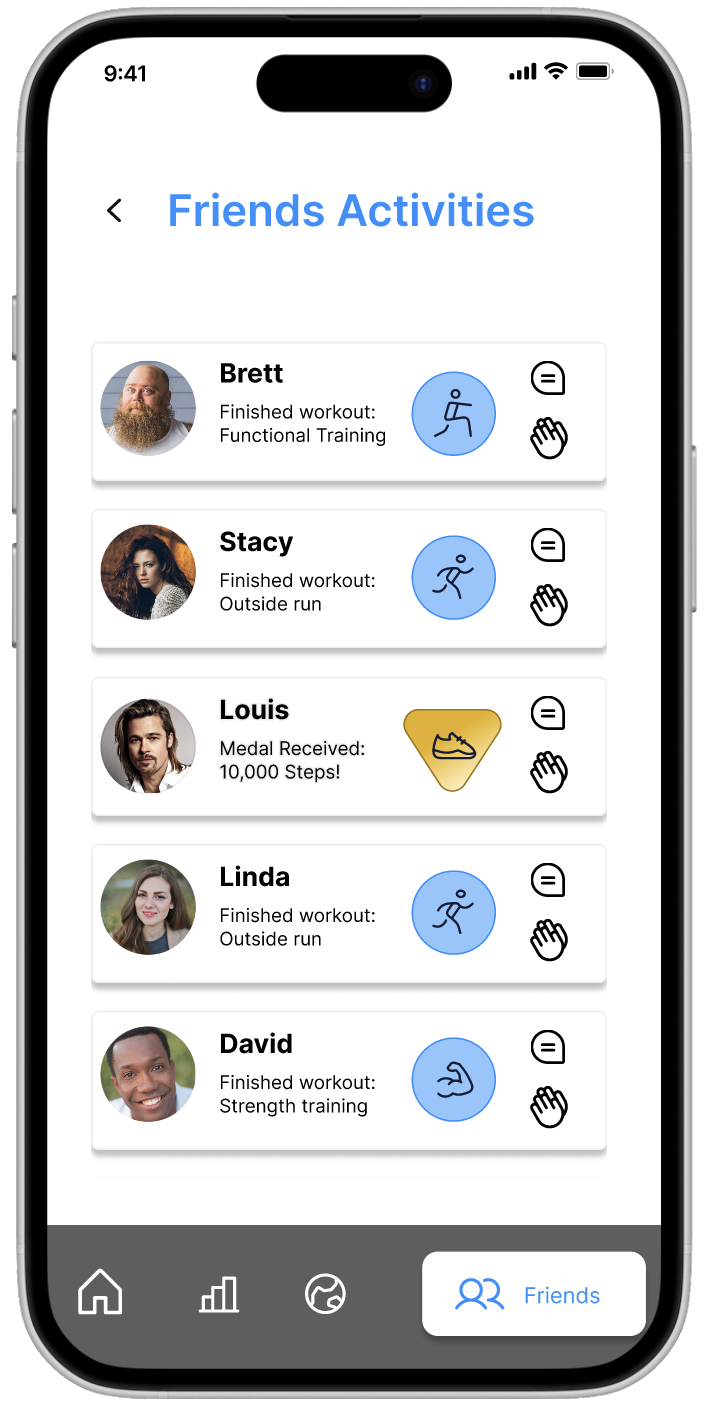
High Fidelity
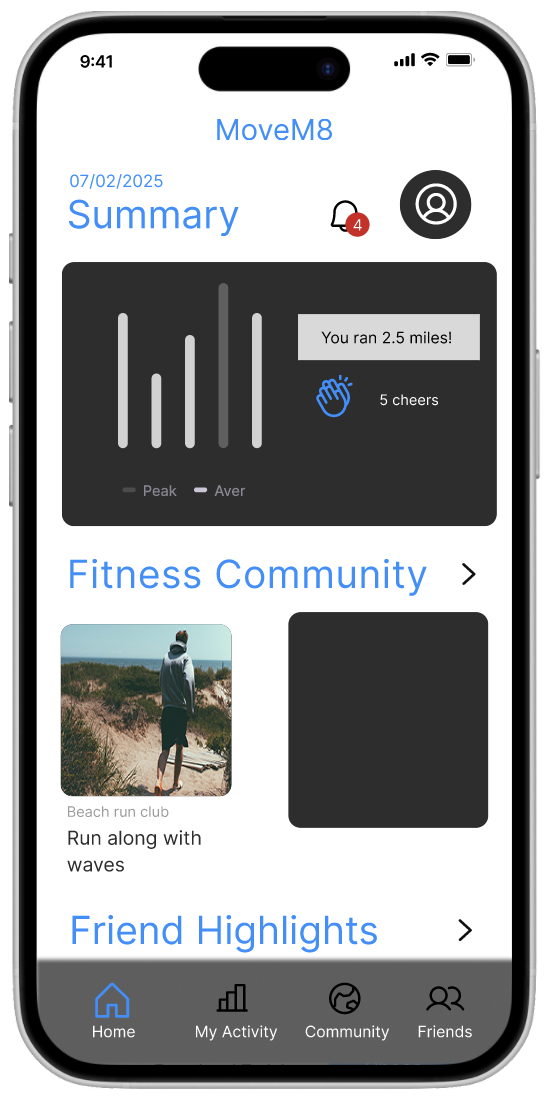

Simplified summary data
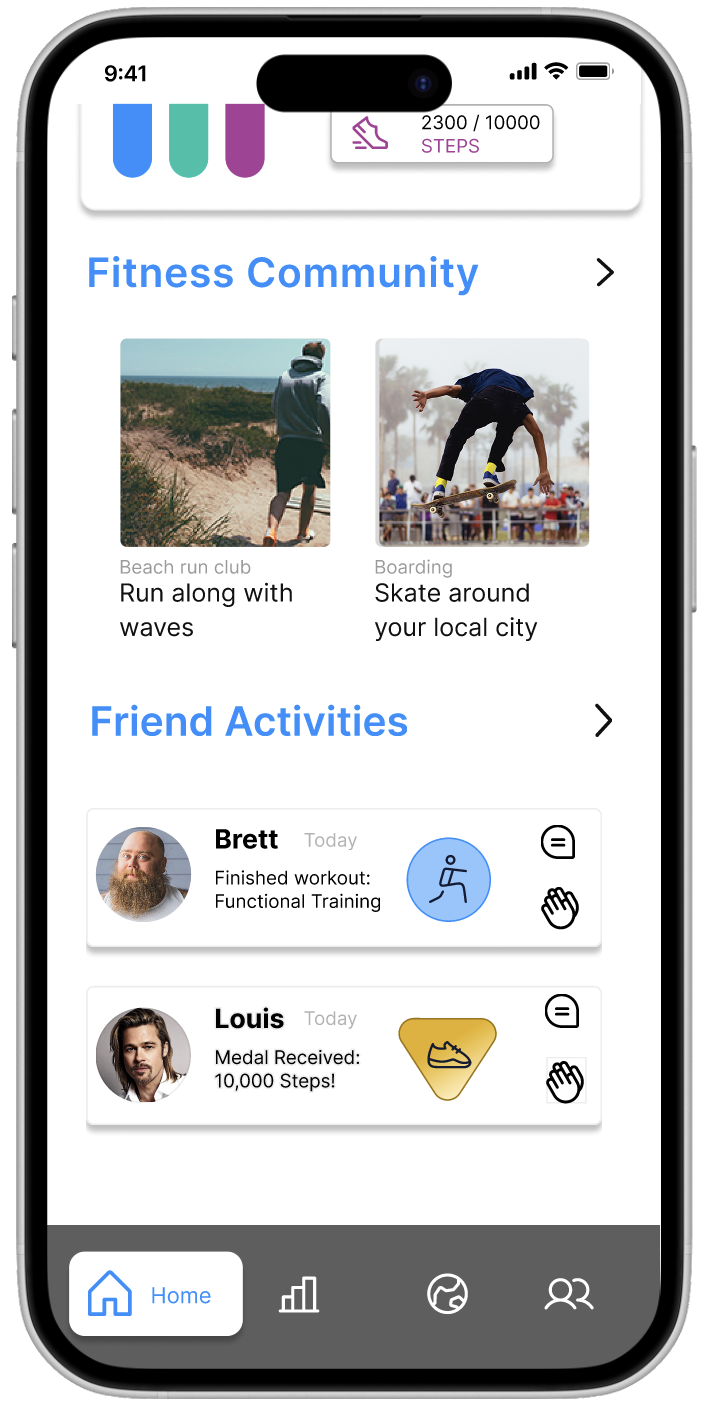
Changed
Dark background
Cheer button to an icon
Medals
Messaging system
Second Round of Interview
Insight from second round research
All 6 participants liked the cheering feature
3 participants wanted better graph filtering options
5 participants preferred no general chat
5 participants valued the social/community aspect
4 participants wanted a clearer feed layout
Design change implemented
Kept cheering as a core feature and enhanced visibility in the feed
Prioritized social feed and group challenges in navigation hierarchy
Updated feed with cleaner card design, larger visuals, and reduced clutter
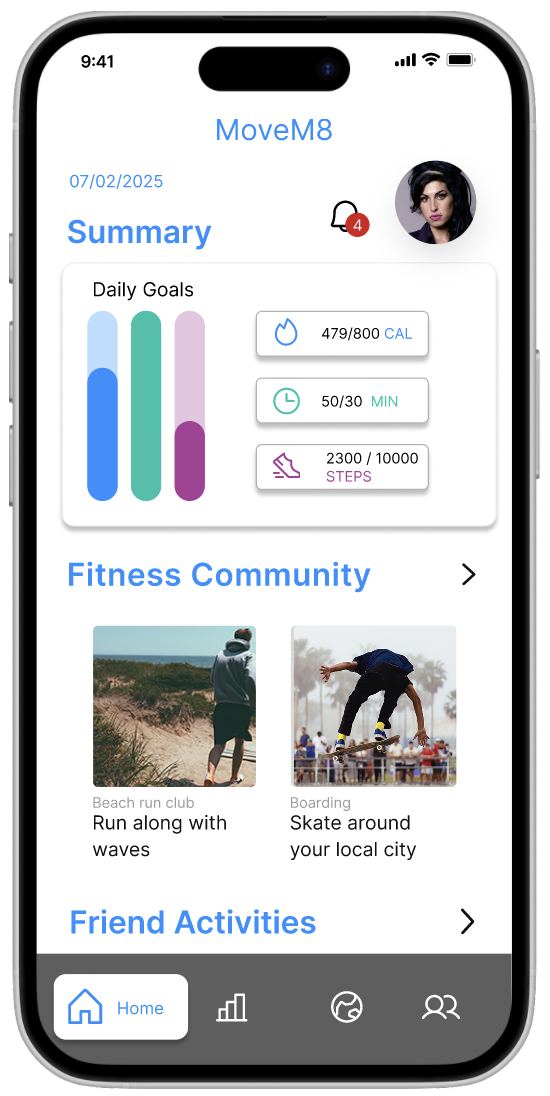
Key Design Decisions Second Iteration
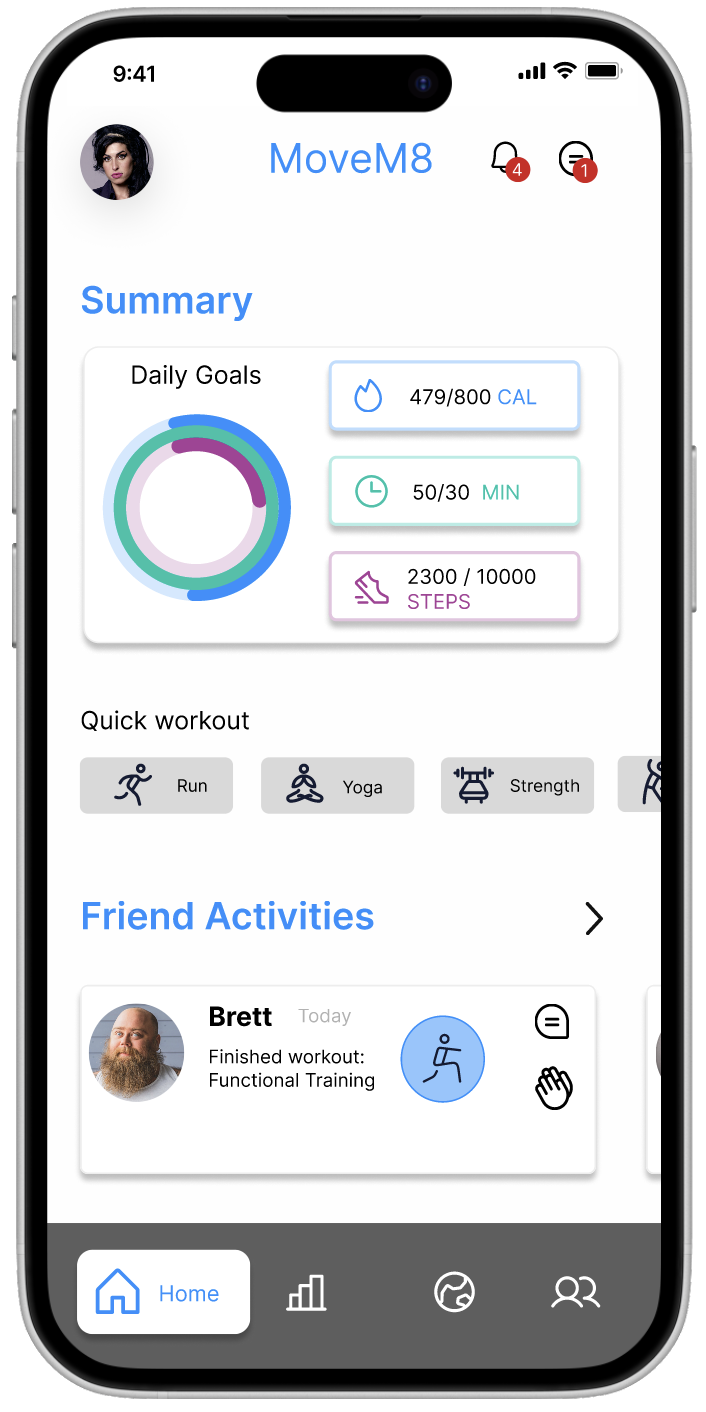
Changes in the daily goal Summary
Added a “Quick workout” tab and moved “Friend Activities”
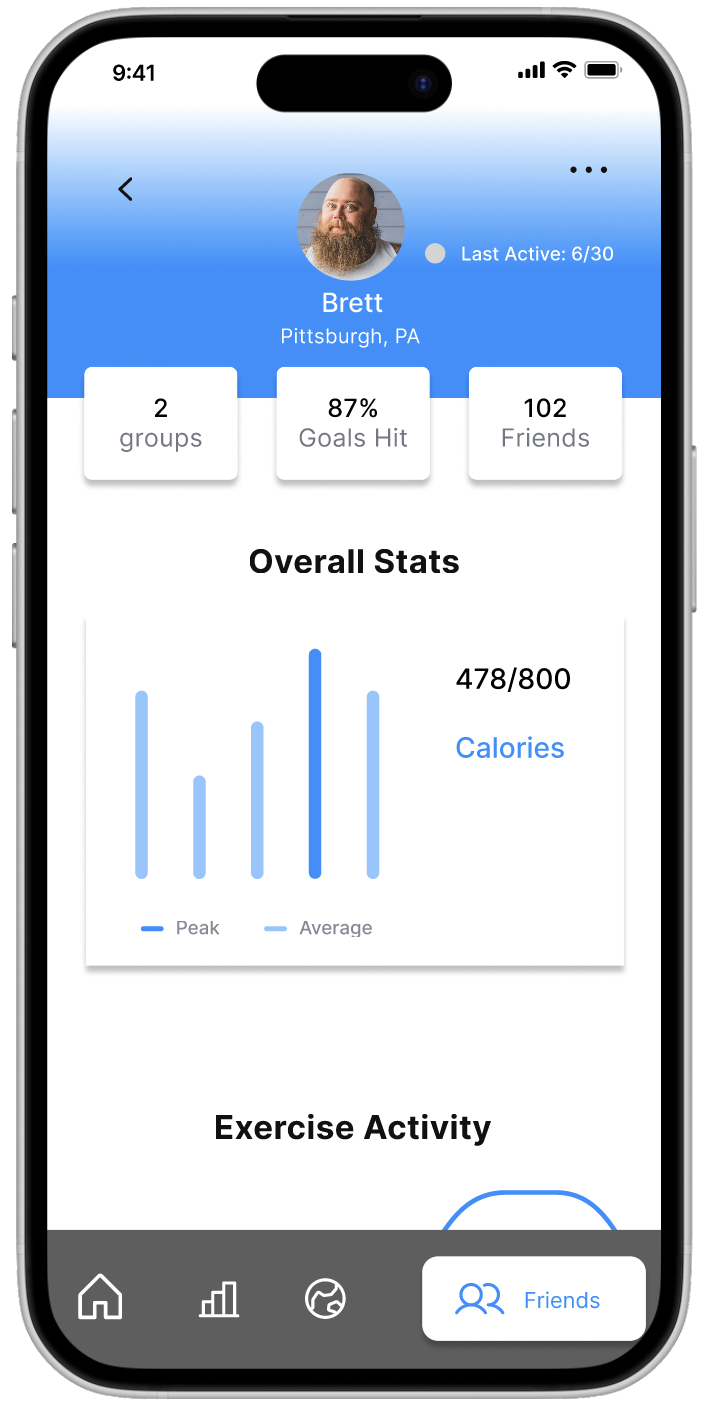
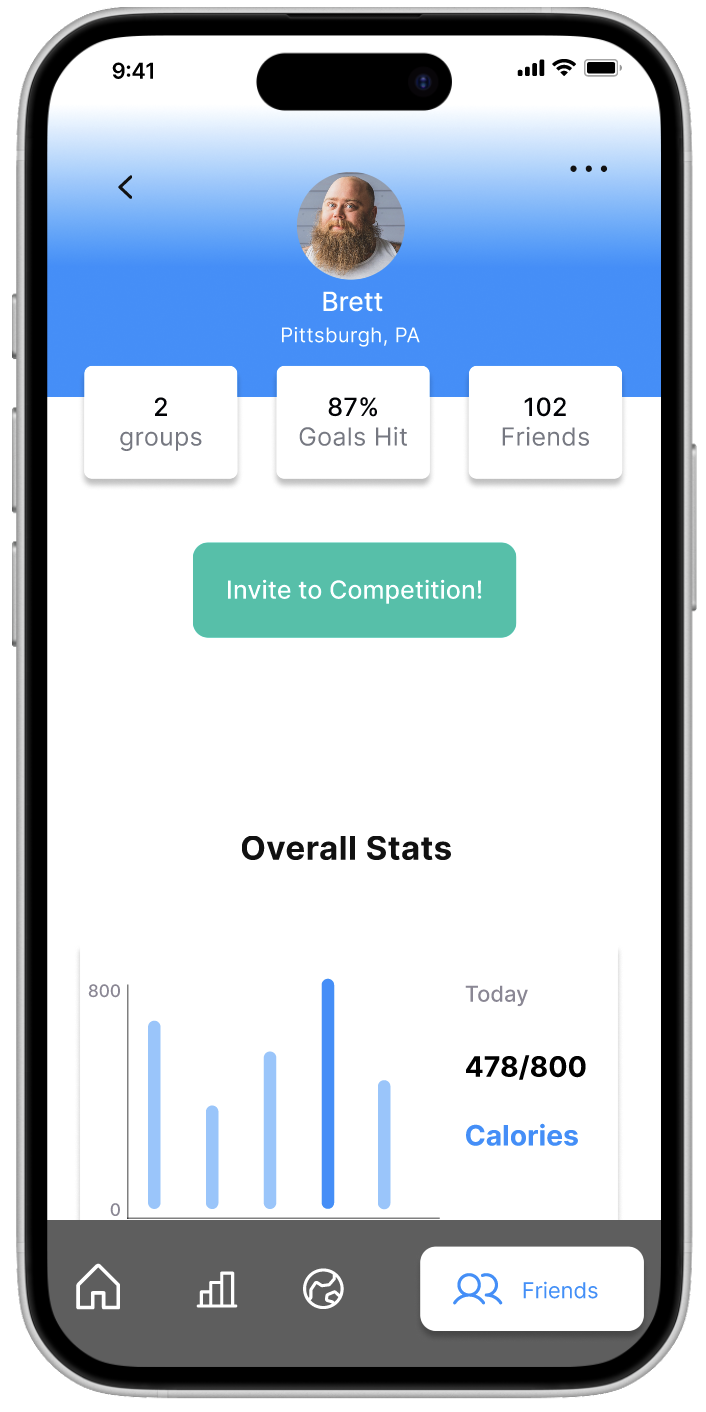
Added the option to invite friends to a competition
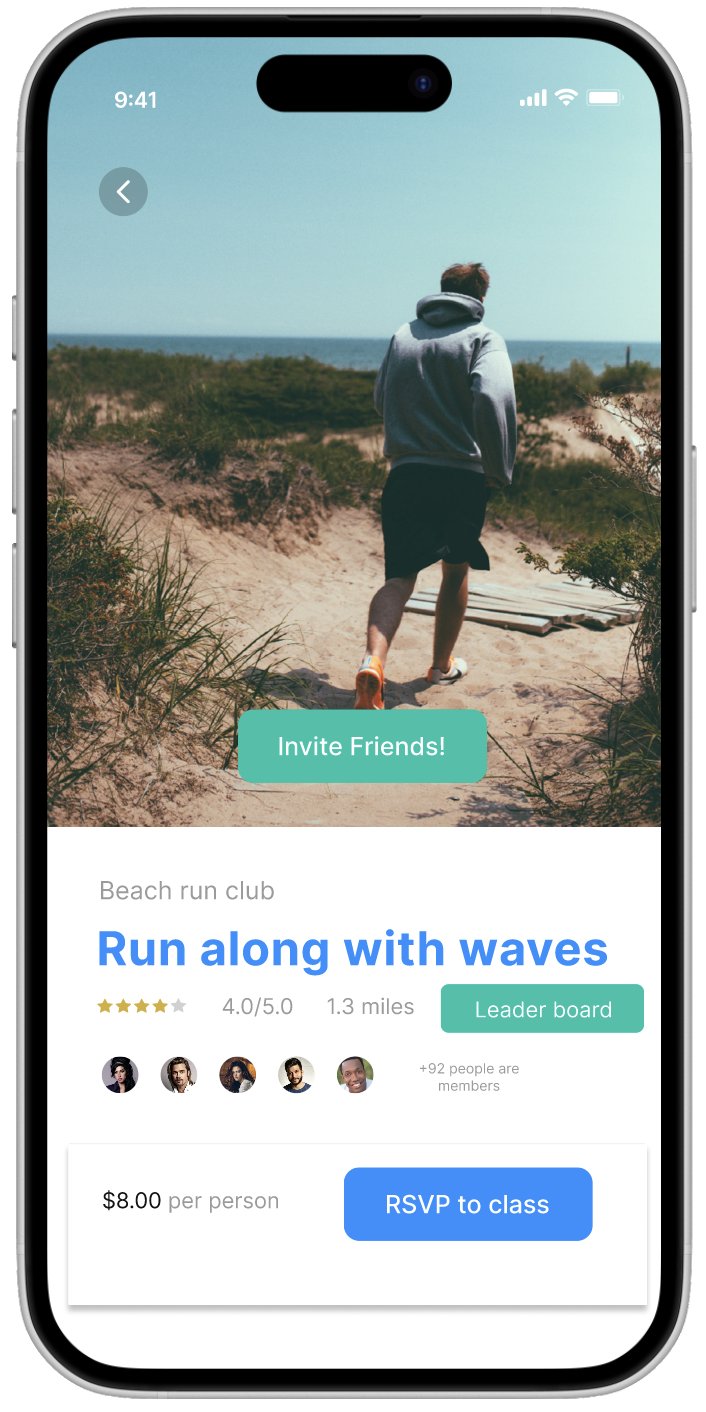
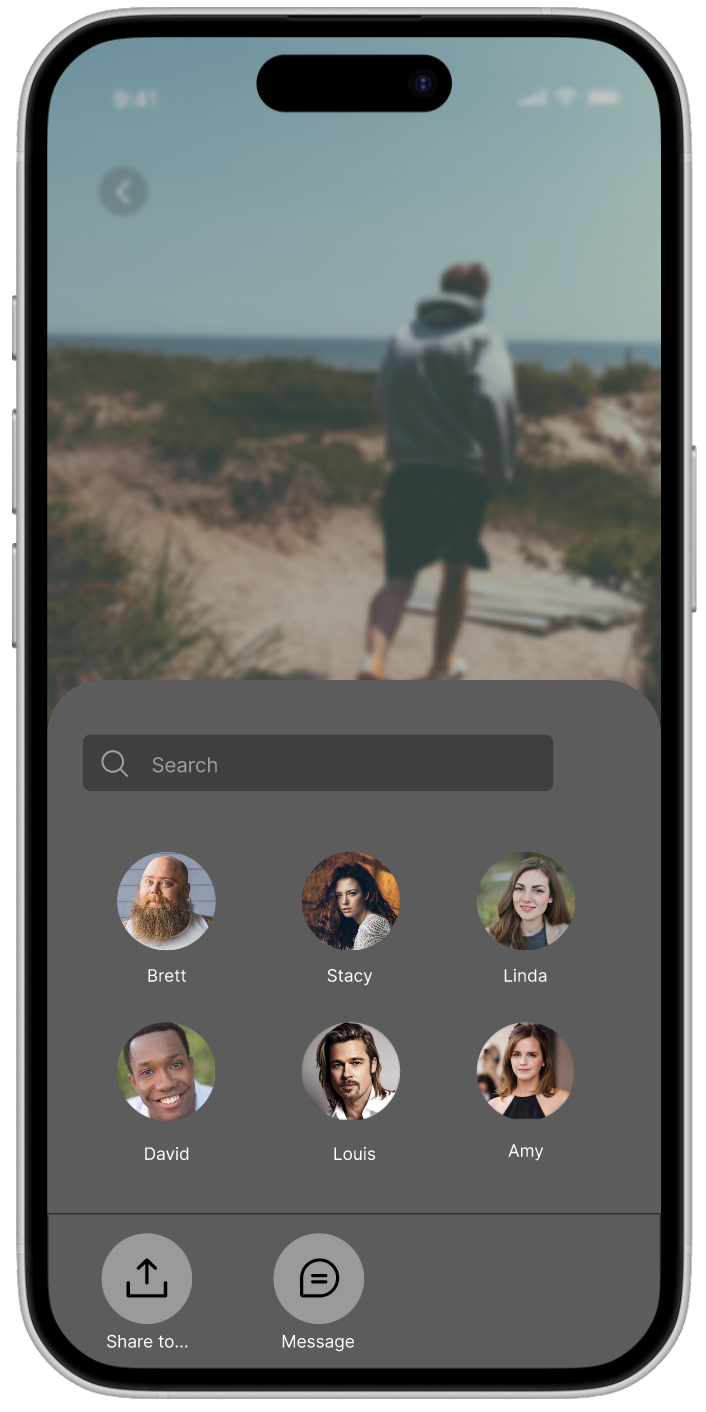
Invite friends to community groups added
Select people from the app that you are friends with or send an invite via text message

why it matters
These updates improved clarity, personalization, and ease of interaction. Three of the top themes surfaced in usability testing.
Conclusion
Through two rounds of iterative testing, MoveM8 evolved from a simple activity-sharing tool into a more intuitive, community-driven experience.
Participants reported that the app felt more engaging, easier to navigate, and better at fostering real social connection. Features like the cheering system and quality-time tracking became standouts, helping users feel supported rather than pressured.
Next Steps
Future ideas for the project are implementing a more robust social system. Gamifying the experience by adding medals that reflect that, like a “Social Butterfly” medal for cheering 10 friends. Push notifications for when someone is beating the user in a competition. Iterating further on the “Competition” with friends aspect of the application and integrating friend competitions into leaderboards of community events. Another request was an option to make personal profiles private or public.